
For more than a hundred years, field guides carried one gentoo penguin. Then geneticists looked closer — and the gentoo split into four. Four species, wearing the same orange bill and the same white headband, hiding in plain sight on the same cold beaches. This is the gentoo file: a case study in how much of the living world is still mislabeled.
The bird itself
Start with the animal, because it's a wonderful one. The gentoo is the third-largest penguin, a brush-tailed sprinter with a bright orange-red bill and a white patch sweeping over the top of its head like a bonnet. Underwater it is the fastest penguin alive — bursts of about 36 kilometres per hour, chasing krill, fish, and squid. On land it builds nests of stones, and males famously offer a pebble to a prospective mate; a good stone is a serious gift in a gentoo colony. They breed on sub-Antarctic islands and down the Antarctic Peninsula, in colonies that can run to thousands of noisy, pebble-stealing pairs.
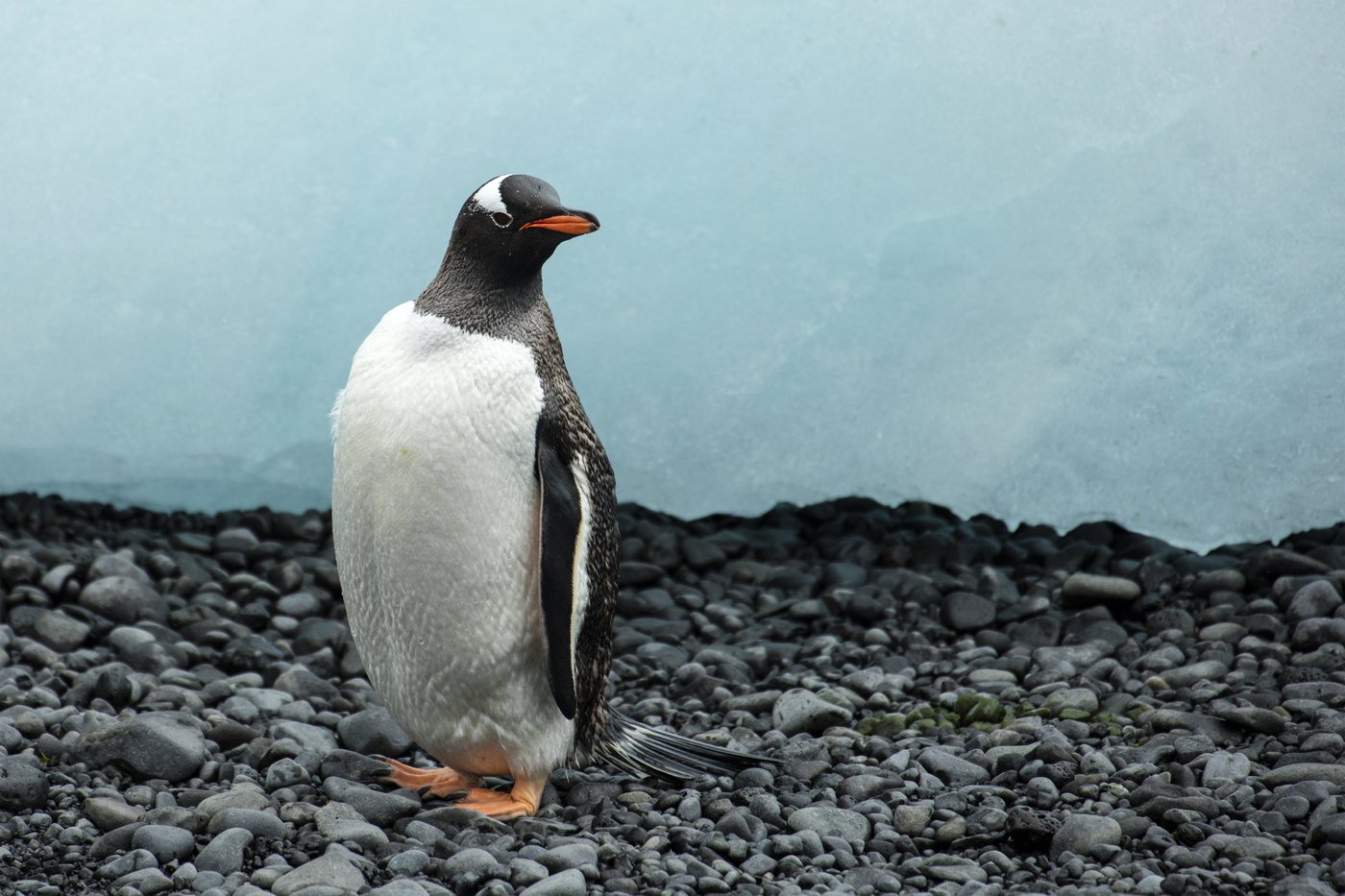
Key facts — the gentoo file
- The split: genetic and physical studies identify four distinct gentoo lineages, proposed as four separate species — a story reported widely again in September 2026.
- The speed: fastest-swimming penguin — bursts near 36 km/h (22 mph).
- The size: third-largest penguin species, roughly 50–90 cm tall depending on the population.
- The nest: a ring of stones; males present a chosen pebble to a female.
- The range: sub-Antarctic islands and the Antarctic Peninsula — different lineages on different island groups.
Four lineages, one field guide entry
The four gentoo lineages live largely apart: different island groups scattered around the Southern Ocean, each population subtly different in size and proportions, and clearly different in DNA. Because they look so alike, science filed them as one species, Pygoscelis papua, for a century. Modern genetic work draws the lines differently — four branches that split long ago and have been going their own way ever since. Taxonomy moves slowly and the four-species proposal is still being argued over in the journals, which is part of the story: the birds don't care what we call them. The counting does.
Why the split is not just paperwork
Conservation runs on lists. One big, widespread gentoo species reads as secure — its total population looks healthy. But average the four together and you can hide a decline: northern gentoo populations have been growing as seas warm, while some southern populations, at the cold edge of the range, are shrinking. If each lineage is its own species, each gets its own trend line, its own risk assessment, its own protection. A penguin that was "fine" as a quarter of a species can turn out to need help as a species of its own. The gentoo's secret — that it was four birds all along — is exactly the kind of fact that changes what happens next.
So the next time a field guide calls something common, remember the gentoo: four species, one name, a hundred years of being looked at without being seen. Keep looking closer.
Frequently asked questions
Are gentoo penguins really four species?
Genetic research says the birds we call gentoo penguins form four distinct lineages that researchers have proposed as separate species — reported widely again in September 2026. The birds look nearly identical; the differences live in their DNA, their measurements, and the separate islands they call home.
Why does splitting one species into four matter?
Conservation counts species, not lineages. One widespread, secure species can hide a small, declining one inside it. If the four gentoos are counted separately, each gets its own population trend — and southern populations retreating with the warming climate stop being averaged away by thriving northern ones.
How fast can a gentoo penguin swim?
Gentoos are the fastest-swimming penguins, reaching about 36 km/h (22 mph) underwater — speed they use to chase krill, fish, and squid in short, powerful bursts.
Keep exploring
- 🦑 Bigfin Squid: The Ghost With Arms Longer Than a Bus — the least-seen giant in the sea
- 🐦⬛ Case File #057: Crow Facts — the bird that remembers your face
- 🐦 Backyard Birds Field Guide — five birds to know at home