
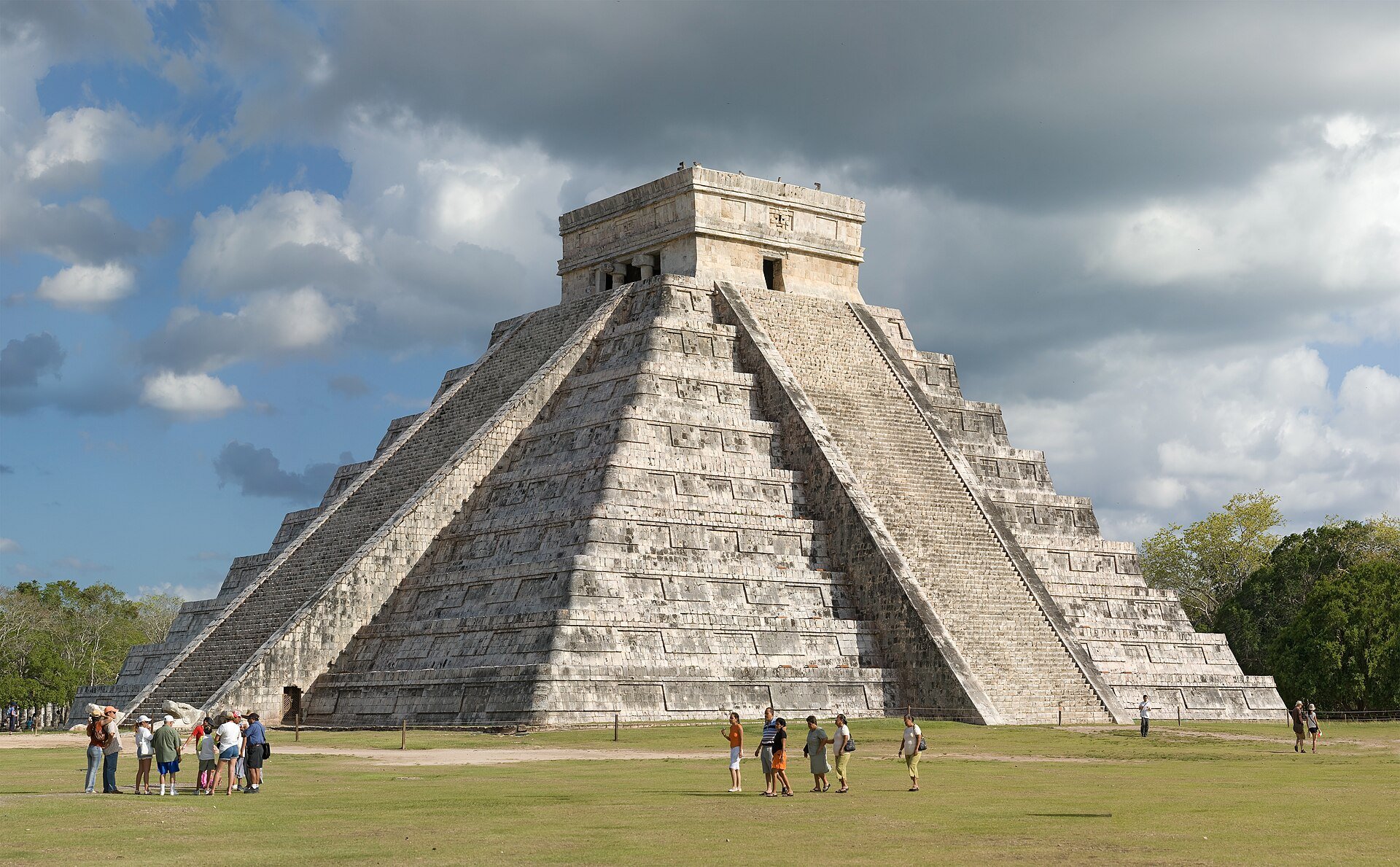
This pyramid is a calendar of stone. Ninety-one steps a side — three hundred sixty-five in all. Clap at its base, and it answers with a quetzal's cry. Its priests tracked Venus from a stone observatory. Its cenote was a portal to the underworld. And twice a year, a serpent of light descends. El Castillo isn't just a building at Chichen Itza — it's an instrument, and it's still playing.
Watch the investigation
The Chichen Itza Short — "Twice a Year, a Serpent Descends This Pyramid" — is live on the channel.
Watch on YouTube365 steps: a year you can climb
Count the pyramid and you count the year. Each of El Castillo's four faces carries a staircase of 91 steps; four times 91 is 364, and the platform on top makes 365 — one step for every day. Nothing about that is an accident of construction. The Maya built their calendar into the architecture itself, so the whole city could read the year by climbing it.
Key facts — Case File #084
- The place: Chichen Itza, Mexico — El Castillo, the Temple of Kukulkan.
- The calendar: 91 steps per side × 4, plus the top platform = 365 steps, one per day.
- The echo: a handclap at the base returns as a quetzal-like chirp.
- The observatory: El Caracol, a stone tower aligned to track Venus.
- The cenote: the Sacred Cenote, a portal to the underworld, received offerings of gold, jade, and human remains.
- The serpent: at the equinoxes, seven triangles of light form a serpent descending the north staircase.
Clap — and the pyramid answers
Stand at the foot of the staircase and clap once. The sound strikes the steps and comes back changed: a descending chirp, eerily like the call of a quetzal, the brilliant bird the Maya held sacred. The stairway is an acoustic instrument tuned by its own geometry. And El Castillo wasn't the city's only instrument — across the grounds stands El Caracol, a round stone observatory whose alignments tracked Venus across the sky. Below ground, the Sacred Cenote waited: a natural well the Maya treated as a portal to the underworld, and into which offerings of gold and jade — and human remains, dredged up centuries later — were cast.
Twice a year, a serpent descends
The strongest beat is saved for last, twice a year. At the equinoxes, the low sun hits the pyramid's north staircase so that seven triangles of light and shadow ripple down its balustrade — a serpent made of sunlight, slithering from the temple top to the carved serpent head at the base. Kukulkan, the feathered serpent, coming down to earth on schedule. A calendar, an instrument, an observatory, a portal — and a god arriving by appointment. That's not a ruin. That's a machine for keeping time with the sky.
Frequently asked questions
How many steps does the Chichen Itza pyramid have?
365. Four stairways of 91 steps make 364, plus the platform on top — one step for every day of the year. The pyramid is a calendar you can climb.
What happens when you clap at Chichen Itza?
The pyramid answers. A handclap at the base of the staircase bounces back as a descending chirp that sounds like the call of a quetzal — the sacred bird of the Maya.
What is the serpent of light at Chichen Itza?
Twice a year, at the equinoxes, the afternoon sun throws seven triangles of light and shadow down the north staircase — the body of a serpent, descending to the stone serpent head at the base.
Keep exploring
- 🏔️ Machu Picchu: The City the Conquerors Never Found — another stone city tuned to the sun
- 🏛️ Göbekli Tepe — a temple older than farming itself
- 🗿 Easter Island — the statues that walked